30
SEP
2026
Photographing Sri Lanka with Glenn McKimmin: Wildlife, Landscapes and Culture
Read Article
For the first departure of this new photography tour, Jetwing Eco Holidays worked closely with Glenn McKimmin to develop an itinerary around what matters to photographers in the field: compelling subjects, strong locations, time to work an encounter, changing light and opportunities that go beyond the standard tourist circuit.
The collaboration brought together two complementary areas of expertise. Glenn contributed more than 17 years of international photography tour-leading experience and the perspective of a professional photographer, while Jetwing Eco Holidays brought its specialist knowledge of Sri Lankan wildlife, national parks, naturalists, field logistics and wildlife photography experiences.
The result was an 11-day photographic journey through Sri Lanka covering street and people photography in Negombo, the architecture and coast of Galle, elephants in Gal Oya and Kalawewa National Park, leopards and birdlife in Kumana National Park, the landscapes of the central highlands, and the cultural heritage of Kandy, Sigiriya and Pidurangala.
And, most importantly, the itinerary delivered in the field.
Glenn McKimmin is an Australian professional photographer, Fujifilm X-Photographer and photography expedition leader whose work spans landscapes, travel, culture and wildlife.
Photography tours have been a major part of Glenn’s work for more than 17 years, taking photographers to destinations around the world. His current expedition portfolio ranges from wildlife-focused journeys photographing big cats in India and African wildlife in Kenya to cultural, landscape and nature photography across destinations including Mongolia, Japan, Indonesia and Sri Lanka.
This combination of professional photography and extensive tour-leading experience made Glenn a natural partner for a photographic journey designed to show just how varied Sri Lanka can be through the lens.
A successful photography itinerary needs to work differently from a conventional sightseeing tour.
Photographers often need more time with a subject. Wildlife encounters cannot be scheduled to the minute. The direction of light can completely change an image. Sunrise and sunset may be more important than standard sightseeing hours, while a location that receives comparatively little tourism may offer far greater photographic potential than a famous attraction.
This was where the collaboration between Glenn McKimmin and Jetwing Eco Holidays became particularly important.
Glenn’s experience as a photographer and tour leader helped shape the journey around photographic opportunities, while Jetwing Eco Holidays’ experience operating specialist wildlife tours in Sri Lanka helped determine where those opportunities could be found, how they could be approached and how wildlife encounters could be incorporated responsibly into a wider island itinerary.
Rather than concentrating on a single genre, the programme was designed around wildlife photography, landscape photography, people and street photography, architecture and Sri Lankan culture.
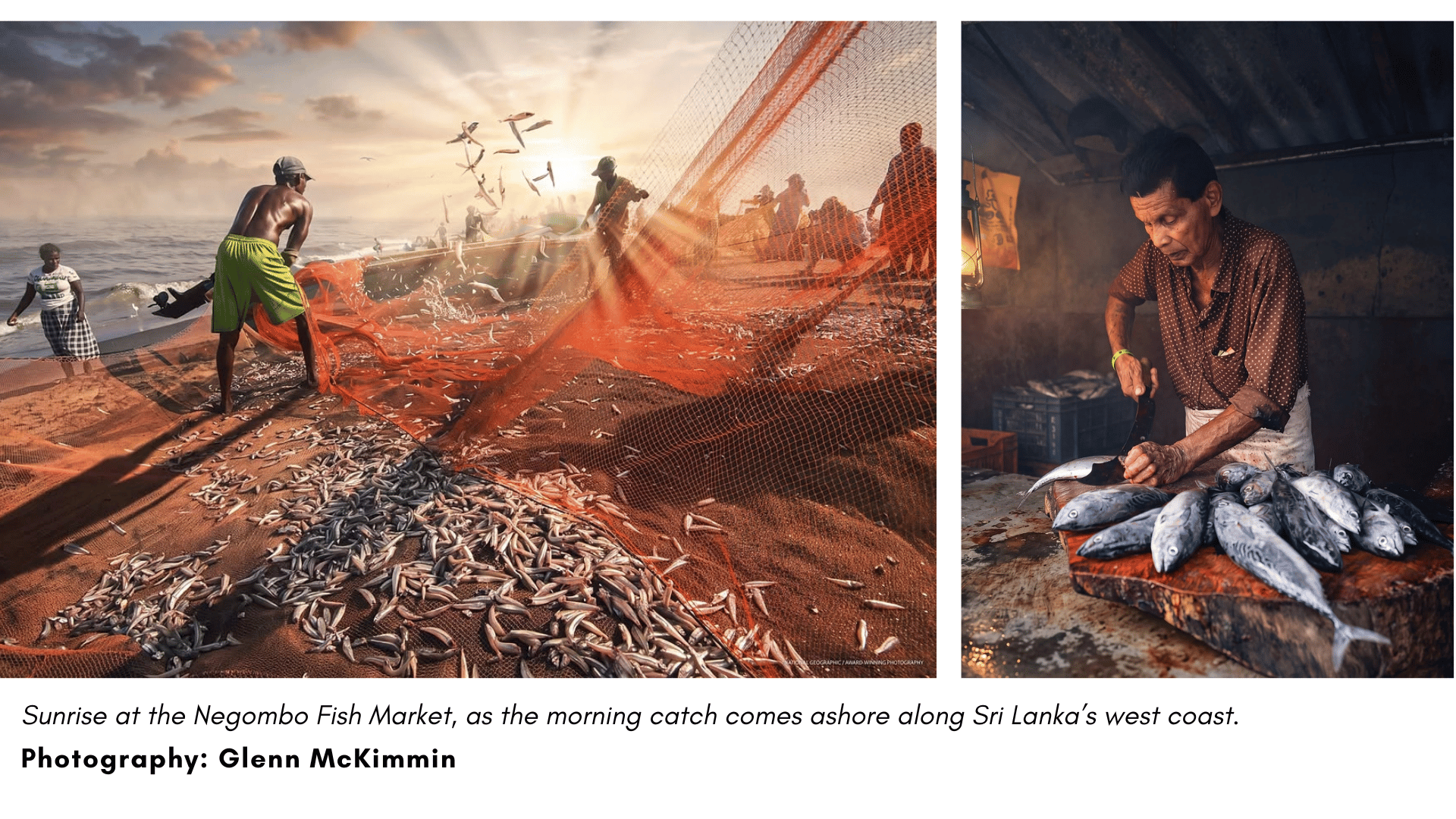
The journey began in Negombo, close to Sri Lanka’s international airport but also home to one of the island’s most recognisable fishing communities.
An early start took the group to the Negombo Fish Market at sunrise, when the beachfront becomes a hive of activity. Fishing boats return with their catch, traders work along the shore and fish are sorted, carried, sold and laid out against a backdrop of sand and sea.
For photographers, the attraction is not a single subject but the combination of movement, people, colour, texture and morning light.
It provided an immediate introduction to photographing everyday life in Sri Lanka and established an important theme for the journey: this would not be a tour concerned only with landscapes and wildlife, but with the people and traditions encountered along the way as well.
From Negombo, the photographic focus shifted to Sri Lanka’s southern coast and Galle.
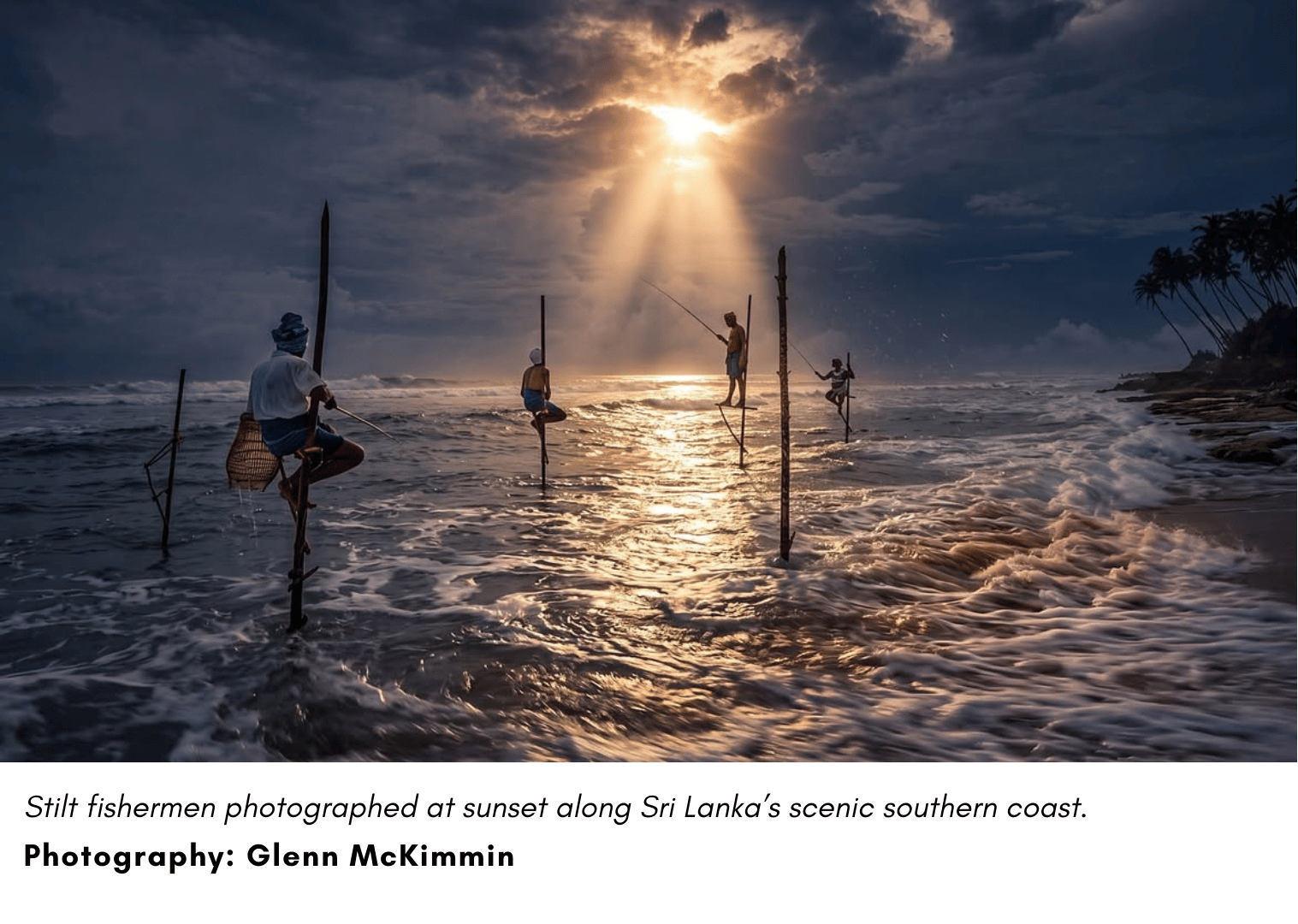
A sunset session with Sri Lanka’s iconic stilt fishermen placed one of the country’s most recognisable photographic subjects against the light and colours of the Indian Ocean.
Galle itself offered an entirely different visual environment.
Inside the UNESCO-listed Galle Fort, Dutch colonial architecture, weathered façades, narrow streets, small shops and cafés provided opportunities for architecture, detail and street photography. The fort’s ramparts and coastal setting added wider compositions where historic buildings and the ocean could be brought together within the same frame.
It demonstrated one of Sri Lanka’s strengths as a photography destination: dramatically different subjects can often be reached within relatively short travelling distances.
The journey into Sri Lanka’s wildlife began at Gal Oya National Park, where the group exchanged roads and safari tracks for a boat.
Gal Oya offers one of Sri Lanka’s more unusual wildlife experiences through boat safaris on Senanayake Samudraya, the country’s largest reservoir. Elephants can sometimes be encountered along its shores and islands, and, under the right circumstances, may enter the water or swim between land masses.
The possibility of photographing a wild Asian elephant moving through open water makes Gal Oya particularly interesting from a wildlife photography perspective.
Swimming elephants are never something that can be guaranteed. Wildlife photography depends on the behaviour of wild animals, patience and a considerable element of chance. But when such an encounter does occur, Gal Oya provides a perspective on elephants that is very different from photographing them from a safari vehicle.
For this tour, the reservoir added another photographic dimension to an itinerary that was about to move much deeper into Sri Lanka’s dry-zone wildlife.
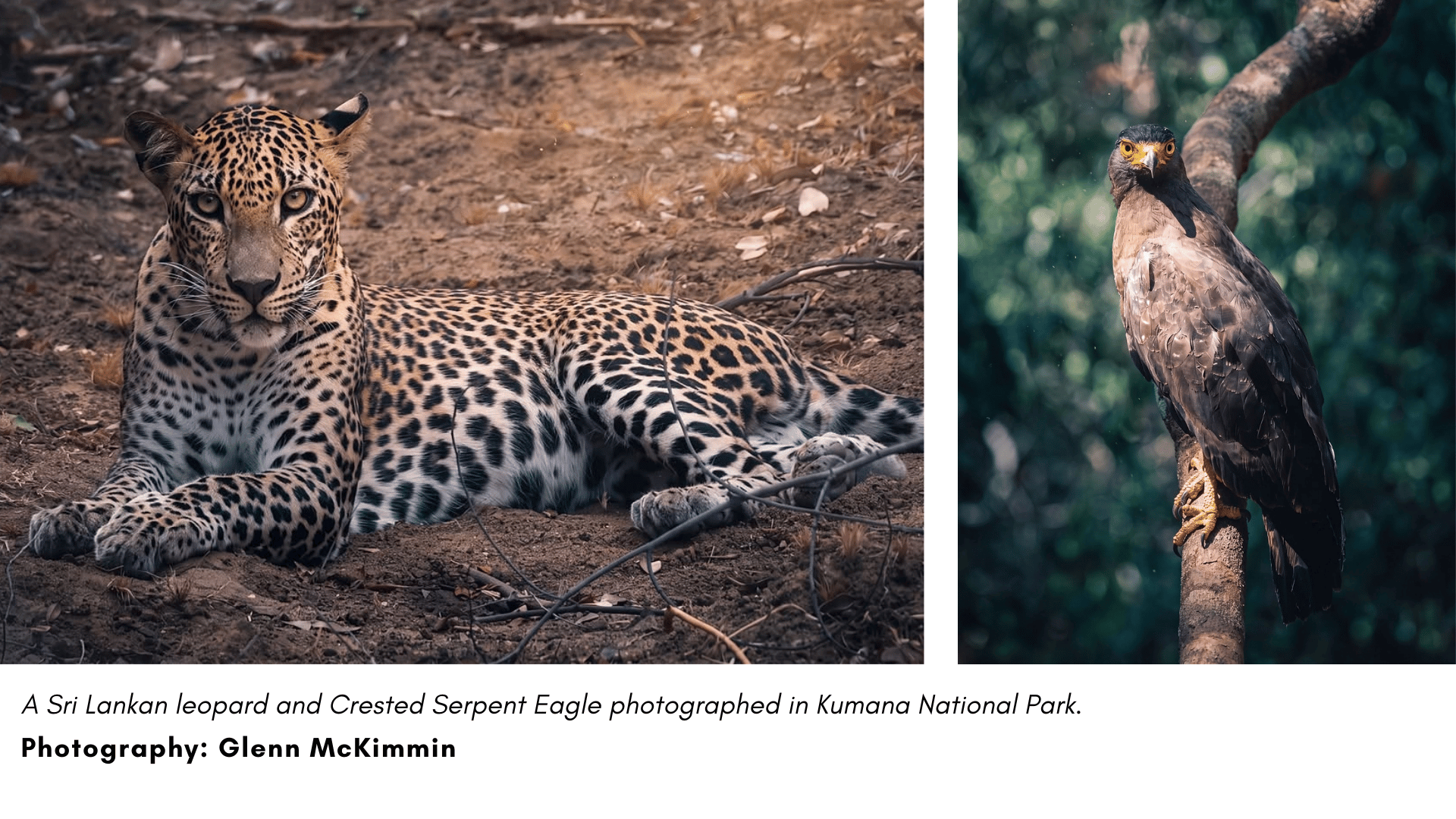
Kumana National Park was the principal leopard photography location on the 11-day expedition.
The group devoted multiple days to wildlife photography in Kumana, including two full days inside the national park. Both full days produced prolonged leopard encounters, giving Glenn and the photographers rewarding opportunities to work with one of Sri Lanka’s most sought-after wildlife subjects.
Rather than a fleeting glimpse, time with an animal allows a photographer to watch behaviour develop, reconsider compositions and respond as its position, surroundings and light change.
The group was fortunate to experience exactly that.
Each of the two full days produced an extended leopard sighting, resulting in some of the strongest wildlife photographs of the journey.
But Kumana offered considerably more than leopards.
The national park’s dry-zone habitats produced encounters with Asian elephants and a variety of birdlife, creating opportunities ranging from larger environmental wildlife compositions to more tightly framed animal portraits.
Kumana is particularly well known for its birdlife, but its wider wildlife diversity makes it an increasingly interesting destination when developing specialist wildlife photography itineraries in Sri Lanka.
For this group, however, the quality of the leopard encounters became one of the defining memories of the expedition.
After several days focused heavily on wildlife, the journey changed character again.
The group boarded the train from Ella to Nanu Oya, travelling through Sri Lanka’s central highlands on a railway journey known for mountain scenery, tea country and sweeping views across valleys and forested slopes.
Arriving in the Nuwara Eliya region opened another chapter of the tour: photography in Sri Lanka’s tea country.
The cooler highlands presented an entirely different palette from the dry forests of Kumana and Gal Oya. Tea-covered hillsides, mist, mountain roads and the distinctive character of Nuwara Eliya provided opportunities to turn the cameras toward landscapes once again.
The landscape component continued at Horton Plains National Park.
Rather than being driven primarily by wildlife sightings, photography here was about scale, atmosphere and the changing highland environment.
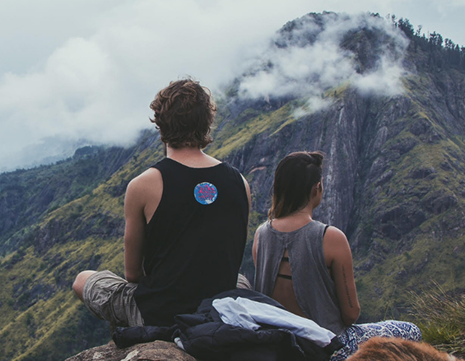
The route towards Baker’s Falls and World’s End took the group through montane grasslands and cloud forest, with opportunities to photograph both the smaller details of the landscape and broader views across Sri Lanka’s central mountains.
Horton Plains also demonstrated just how geographically varied the island is. Within the same photography tour, the group had moved from tropical beaches and dry-zone national parks to a high-altitude landscape where mist, grassland and montane forest create an entirely different visual identity.
From the highlands, the itinerary continued to Kandy, Sri Lanka’s historic hill capital.
The photographic programme included the Temple of the Sacred Tooth Relic, one of the country’s most significant Buddhist sites, alongside Kandy’s streets and surviving colonial-era architecture.
Here, photography once again shifted from wilderness to people, buildings, details and cultural spaces.
Including destinations such as Kandy was important to the philosophy behind the itinerary. Sri Lanka’s photographic potential is not defined by wildlife alone. Within a comparatively compact island, a photographer can move between national parks, ancient cities, religious spaces, working communities, mountains and coastlines during a single journey.
The final stage of the tour brought the group into Sri Lanka’s Cultural Triangle.
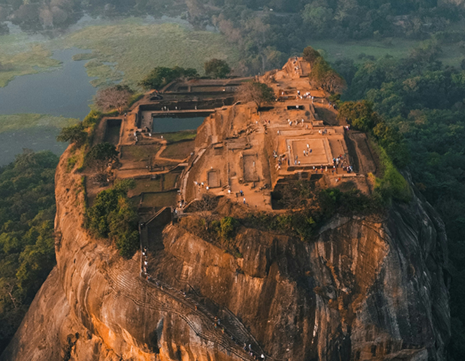
Both Pidurangala and Sigiriya were climbed and photographed, providing two contrasting perspectives on one of Sri Lanka’s most recognisable landscapes.
Sigiriya offered the monumental architecture and archaeology of the ancient rock fortress itself, while Pidurangala provided the wider landscape perspective for which it has become particularly valued by photographers.
After ten days moving between Sri Lanka’s communities, coastline, forests and mountains, the Cultural Triangle brought together landscape and history within the same photographic setting.
There was, however, one more important wildlife session ahead.
For the tour’s final major wildlife photography experience, the group travelled to Kalawewa National Park.
Kalawewa National Park remains considerably less prominent on mainstream Sri Lanka wildlife itineraries than the better-known elephant destinations around Habarana. For specialist photographers, that is part of what makes the park so interesting.
Away from many of Sri Lanka’s busier safari circuits, Kalawewa can provide rewarding opportunities to photograph wild Asian elephants within an expansive dry-zone landscape. The park is particularly notable for the presence of tuskers, making it especially interesting for photographers hoping to spend time observing and photographing some of Sri Lanka’s most impressive male elephants.
On this expedition, Kalawewa produced exactly the kind of encounter the itinerary had been designed to seek.
A sizeable herd of elephants appeared, creating opportunities to photograph animals both individually and as part of the wider herd. Among them were the animals the group particularly hoped to encounter: tuskers.
For Glenn and the photographers, this created opportunities very different from the leopard encounters at Kumana or the boat-based photography at Gal Oya. Wide compositions could incorporate elephants within the landscape, while closer encounters allowed attention to shift towards individual animals, behaviour, texture and portraiture.
It was a fitting final wildlife experience for a tour built around finding photographic opportunities across Sri Lanka rather than relying exclusively on its most heavily visited safari destinations.
What made this first collaborative tour important to Jetwing Eco Holidays was not simply the list of places visited.
It was the way the itinerary was developed.
Glenn McKimmin brought the perspective of a professional photographer and more than 17 years of international photography tour-leading experience. Jetwing Eco Holidays brought specialist knowledge of Sri Lankan wildlife, habitats, national parks, field logistics and the particular requirements of wildlife photographers.
Those roles complement each other in the field.
For a wildlife photography tour, finding an animal is only part of the experience. Photographers also need time, appropriate positioning, an understanding of animal behaviour and guides who recognise that obtaining a photograph may require approaching an encounter differently from a conventional safari.
Equally, a photography tour extending beyond wildlife needs to take light, access, timing, subject variety and travel time into consideration.
That shared approach shaped the 11-day programme, from sunrise at Negombo’s fish market and sunset on the southern coast to prolonged leopard encounters in Kumana, highland landscapes at Horton Plains and elephant photography in Kalawewa National Park.
One of the strongest conclusions from this first journey was the sheer variety of photographic subjects that can be incorporated into a relatively compact itinerary.
A specialist photography tour in Sri Lanka can combine:
Wildlife photography
Sri Lankan leopards, Asian elephants, endemic and migratory birds and other dry-zone wildlife.
Landscape photography
Highland grasslands, cloud forests, tea country, reservoirs, beaches and tropical coastlines.
People and street photography
Fishing communities, markets, rural life and everyday scenes.
Architecture and cultural photography
Galle Fort, Kandy, Buddhist temples and Sri Lanka’s ancient cities.
Railway and travel photography
The central highland railway and the changing landscapes encountered while travelling through the island.
This diversity is what allowed the Glenn McKimmin itinerary to move from photographing people on a beach at sunrise to leopards in a dry-zone forest, elephants in Kalawewa National Park and mist-covered landscapes in the central mountains within the same journey.
For Jetwing Eco Holidays, the completion of this first tour with Glenn McKimmin marks the beginning of an exciting collaboration in specialist photography travel.
The photographs created during the journey speak strongly for the destinations themselves, but the tour also demonstrated the value of designing an itinerary specifically around photographers rather than adapting a conventional sightseeing programme after the fact.
Glenn’s photographic and tour-leading experience, paired with Jetwing Eco Holidays’ wildlife expertise and on-the-ground knowledge of Sri Lanka, allows both teams to approach the country from a different perspective: not simply asking what there is to see, but where, when and how a photographer can experience it at its best.
From the leopards of Kumana and elephants of Kalawewa National Park to the people of Negombo, the coast of Galle and the landscapes of Horton Plains, this first 11-day expedition showed just how much photographic diversity Sri Lanka can offer.
And for Glenn and his group, it resulted in what every photography tour ultimately hopes to produce: memorable encounters, time in the field and a collection of images worth bringing home.
Yes. Australian professional photographer and photography tour leader Glenn McKimmin has led photographic expeditions in Sri Lanka. Jetwing Eco Holidays collaborated with Glenn to develop and operate this specialist photography itinerary combining wildlife, landscapes, people and culture.
Kumana National Park was the principal leopard photography destination during this 11-day tour. The group spent two full days photographing wildlife in the park and experienced prolonged leopard encounters on both days.
Sri Lanka offers elephant photography in several different environments. On this itinerary, Gal Oya National Park provided boat-based wildlife photography on Senanayake Samudraya, while Kalawewa National Park offered opportunities to photograph elephant herds and tuskers in a quieter dry-zone setting.
Gal Oya National Park offers the possibility of seeing elephants enter or swim through Senanayake Samudraya during boat safaris. Such encounters involve wild animals and cannot be guaranteed, but when conditions and animal behaviour align, they provide an unusual opportunity for elephant photography from the water.
Sri Lanka can combine leopard, elephant and bird photography with landscapes, cultural sites, architecture and people photography within a relatively compact journey. Specialist itineraries can therefore be designed either exclusively around wildlife or around a broader range of photographic subjects.
Jetwing Eco Holidays collaborated with Glenn McKimmin on the development and operation of this Sri Lanka photography itinerary, combining Glenn’s photography and tour-leading experience with Jetwing Eco Holidays’ specialist wildlife knowledge and experience operating wildlife and photography-focused travel in Sri Lanka.