30
SEP
2026
Photographing Sri Lanka with Glenn McKimmin: Wildlife, Landscapes and Culture
Read Article
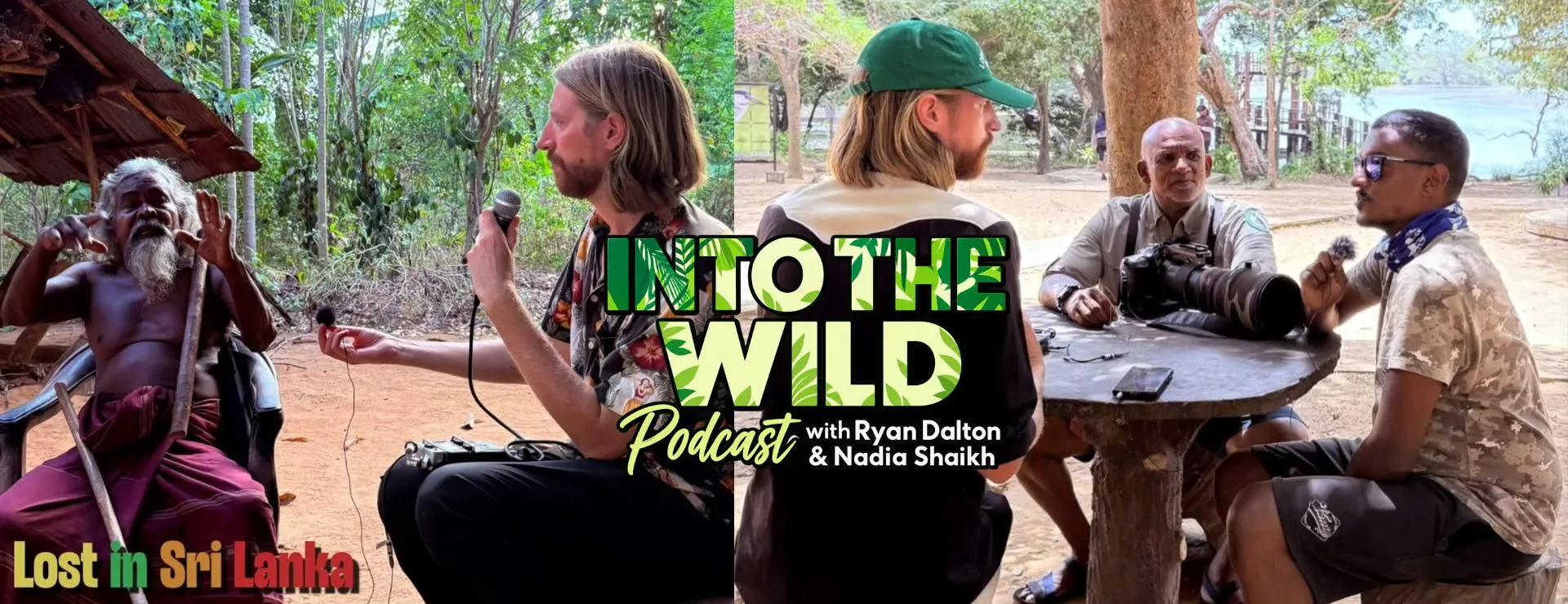
When wildlife and conservation communicator Ryan Dalton arrived in Sri Lanka in August 2025 to record a special series of his Into the Wild podcast, the objective was never simply to tick off a list of wildlife sightings.
Travelling with colleague Daisy Moss, who supported the project with photography and videography, Ryan joined Jetwing Eco Holidays for a journey designed to look deeper into Sri Lanka’s natural world: its wildlife and habitats, but also the people living alongside them, the communities shaped by tourism, and the difficult questions surrounding conservation and land use.
Accompanying the journey were Chandika Jayaratne, Manager and Wildlife Specialist at Jetwing Eco Holidays, and veteran Jetwing Eco Holidays naturalist Suchithra “Hetti” Hettiarachchi, whose decades of experience guiding wildlife and birding tours across Sri Lanka brought another layer of interpretation to every landscape they entered.
The journey would eventually become the three-part Into the Wild: Lost in Sri Lanka podcast series, produced in partnership with Jetwing Eco Holidays. The published series credits Jetwing Eco Holidays for helping make the project possible.
But the real story began months earlier, on the ground in Sri Lanka.
Sri Lanka is often introduced through familiar images: elephants crossing dusty roads, leopards beneath forest canopies, colourful endemic birds and tropical beaches.
Those are certainly part of the story, but understanding Sri Lanka’s wildlife requires looking beyond individual species. It means understanding the landscapes they depend upon, the communities sharing those landscapes, the economic value created by tourism, the pressures that tourism can introduce, and the long relationship between people and wilderness on an island where space is increasingly contested.
For a media project built around wildlife and conservation, that meant creating a journey that could move easily between a national park safari, a conversation with a conservation-minded tourism entrepreneur, an Indigenous community, a remote lake, a rainforest trail and a spontaneous wildlife encounter.
It also meant having naturalists and local specialists alongside the project who could provide context rather than simply access.
That became the foundation of Lost in Sri Lanka.
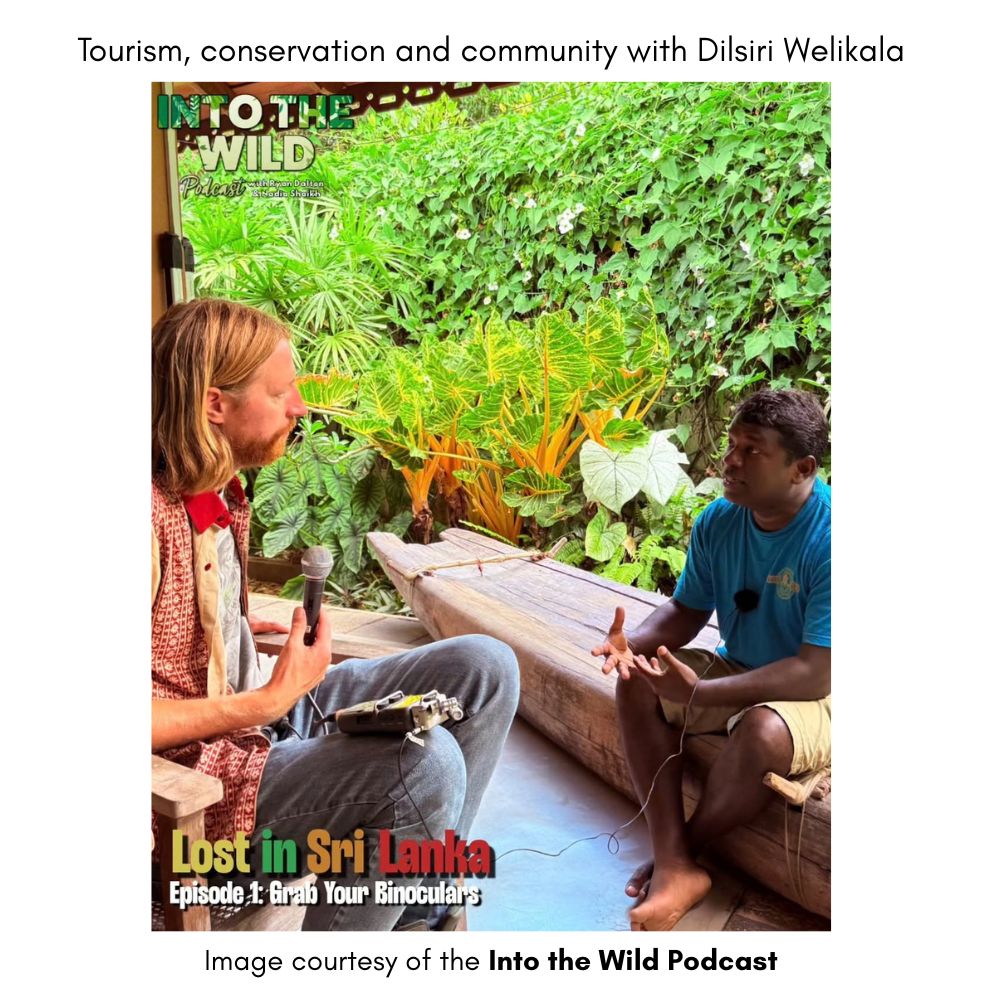
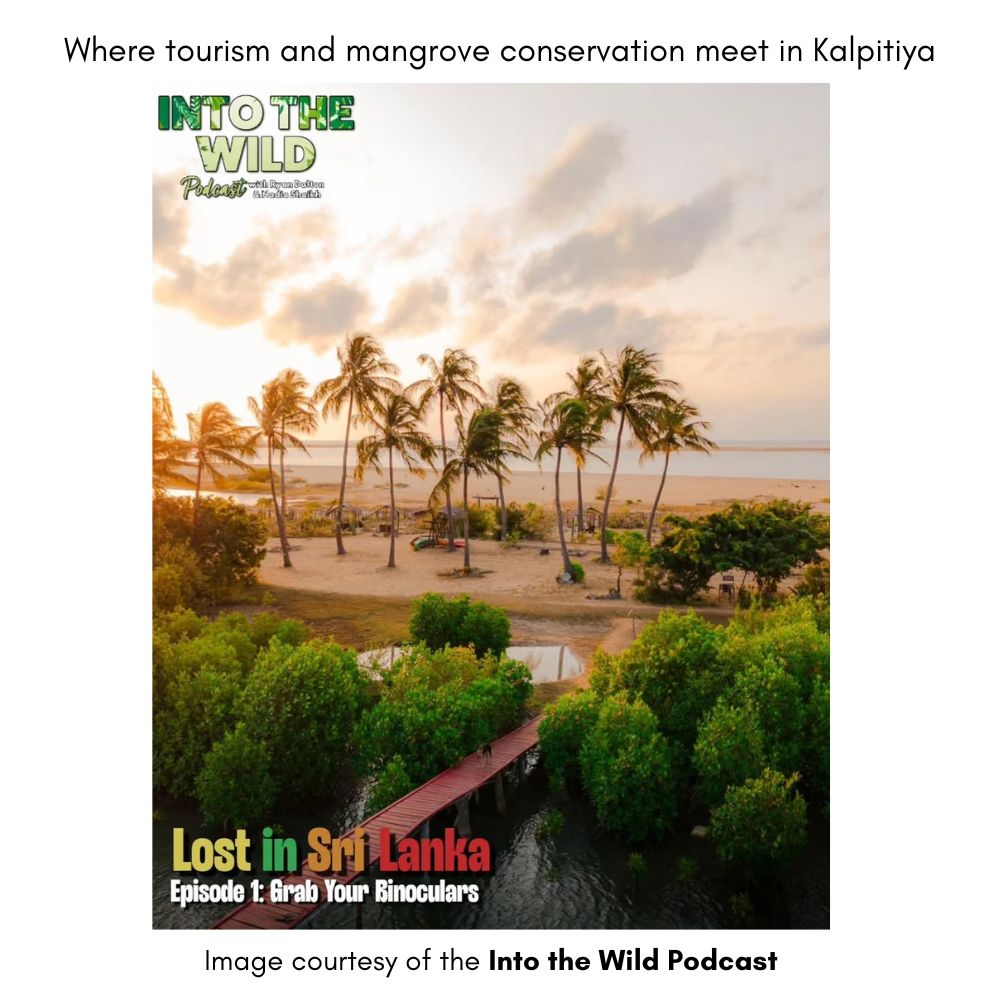
The journey began on Sri Lanka’s northwestern coast with an overnight stay in Kalpitiya, a region where fishing villages, lagoons, mangroves and the Indian Ocean meet.
Here Ryan met Dilsiri Welikala, co-founder of Kitesurfing Lanka, for the first of several conversations that would move the project beyond conventional wildlife tourism.
Kalpitiya provided an interesting place to begin.
Once predominantly associated with fishing communities, the peninsula has developed into one of Sri Lanka’s best-known destinations for kitesurfing. With that transformation came opportunity, but also questions familiar to destinations around the world: what happens to a community when tourism suddenly discovers it?
Sitting amid the property Dilsiri helped create, the conversation moved between tourism, community development and conservation.
One particularly visible example was the work undertaken around mangrove restoration. What began as an environmental effort also demonstrated the multiple roles healthy coastal ecosystems can play. Mangroves provide habitat, enhance the landscape and form a natural buffer along vulnerable coastlines.
Kitesurfing Lanka has since developed these efforts further through environmental and community programmes incorporating mangrove restoration, waste management, education and local initiatives.
For Ryan, the discussion raised one of the questions that would follow the group throughout the journey:
Can tourism transform a place while ensuring the people and natural environments that made it special continue to benefit?
From the coast, the journey turned towards Wilpattu National Park, one of Sri Lanka’s great dry-zone wildernesses.
Two nights near the park allowed time for both a half-day and a full-day safari.
For Ryan and Daisy, these were among their first extended encounters with Sri Lankan wildlife.
Wilpattu’s distinctive villus, natural shallow lakes scattered through the forest, opened onto concentrations of dry-zone birdlife. Painted Storks and other waterbirds gathered around the water, while elsewhere there were encounters with elephants, mongooses and the smaller creatures that often become just as memorable when travelling with a knowledgeable naturalist.
Then came the leopard. It was not the prolonged, unobstructed sighting visitors sometimes imagine before arriving in Sri Lanka. Instead, the animal appeared fleetingly, moving through thick vegetation.
Yet the glimpse demonstrated something arguably more interesting.
Against Sri Lanka’s dry-zone woodland, the seemingly conspicuous coat of a leopard can almost disappear. Rosettes break apart its outline while patches of sunlight and shadow move across the vegetation. An animal that looks almost impossibly vivid in a photograph can become extraordinarily difficult to follow only metres away.
It was a brief encounter, but a memorable introduction to one of the island’s most elusive predators.
Later, as the light began fading across one of Wilpattu’s lakes, crocodiles lay along the bank with their mouths open while the sky behind them turned gold.
It was the kind of wildlife scene that draws travellers to Sri Lanka.
The conversation that followed that evening, however, was about what happens behind those experiences.
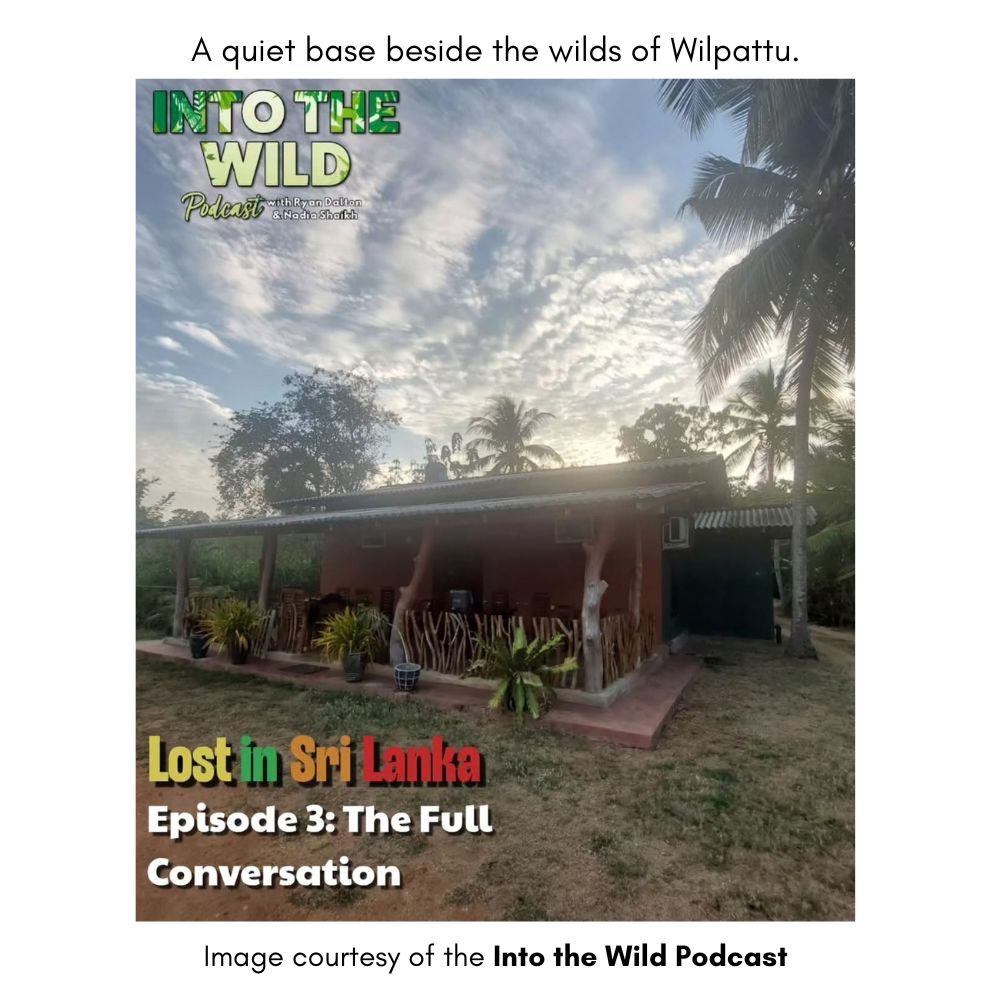
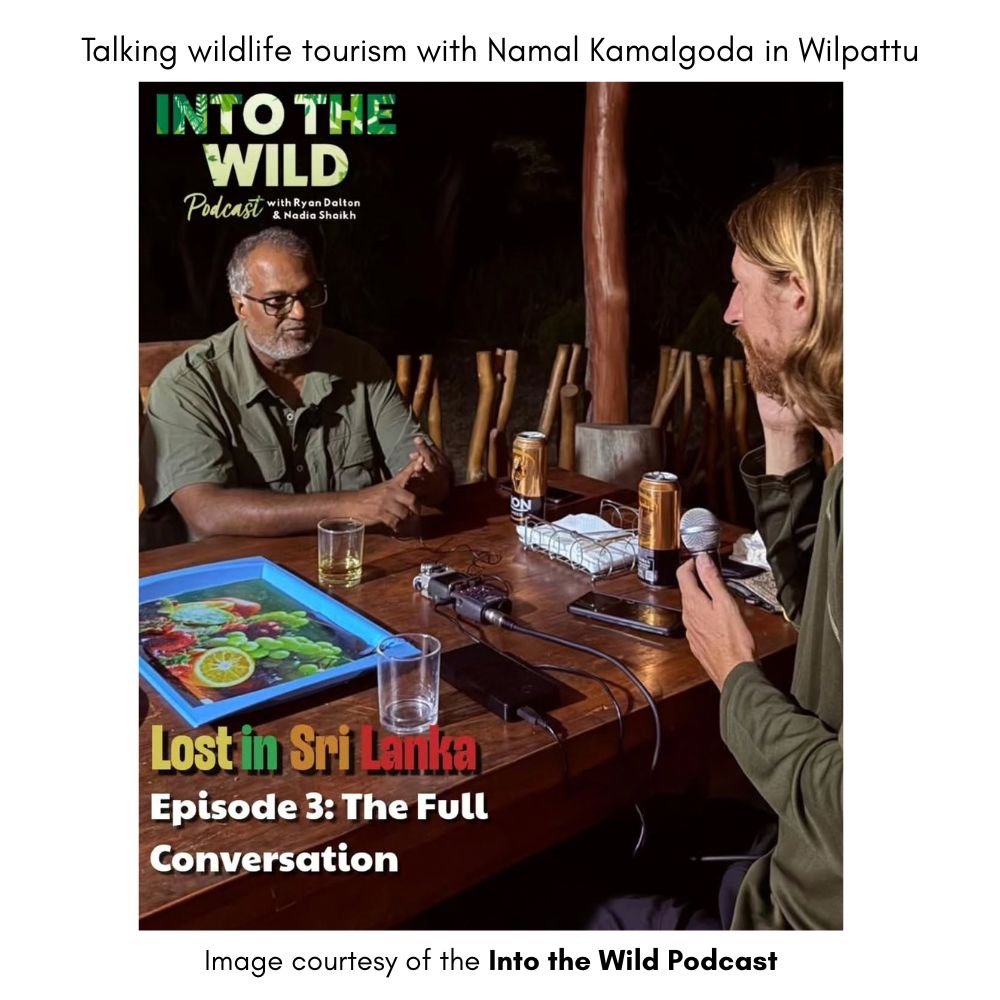
Back at the lodge, Ryan spoke with Namal Kamalgoda of Wilpattu Safari Camp, a wildlife enthusiast whose fascination with Wilpattu eventually drew him away from corporate life and closer to the wilderness he loved.
Living beside a national park provides a very different perspective on wildlife.
An elephant was known to wander through the property, having approached remarkably close to the dining area. During the quiet of the COVID lockdowns, Namal recalled hearing signs of leopard activity around the property at night.
The boundary between a wildlife destination and the places people live and work can be surprisingly thin.
Their conversation moved naturally towards the economics and ethics of wildlife tourism.
Responsible tourism can give wildlife and protected landscapes tangible economic value. It supports jobs, guides, accommodation providers and surrounding communities while contributing to an economy in which keeping wildlife alive and habitats intact has value.
Wilpattu Safari Camp itself describes its philosophy as putting the welfare of wildlife first while linking sustainable conservation with responsible tourism and nearby communities.
But there is another side. Promote a wildlife destination too aggressively and the pressure created by growing visitor numbers can begin to diminish the very wilderness people travelled to experience.
Conservation and tourism therefore require something more difficult than simple growth.
They require balance.
Travelling southeast brought the group to Mahiyanganaya and the peaceful shores of Mapakada Lake.
Their base, Mapakada Village, sits beside the water surrounded by gardens and countryside, with views extending across the lake. The property itself promotes birdwatching and boat-based exploration of Mapakada Lake, making it particularly suited to the next stage of the journey.
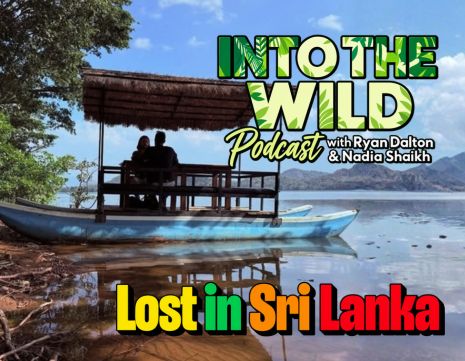
It was here that one of the defining visual moments of Lost in Sri Lanka was created.
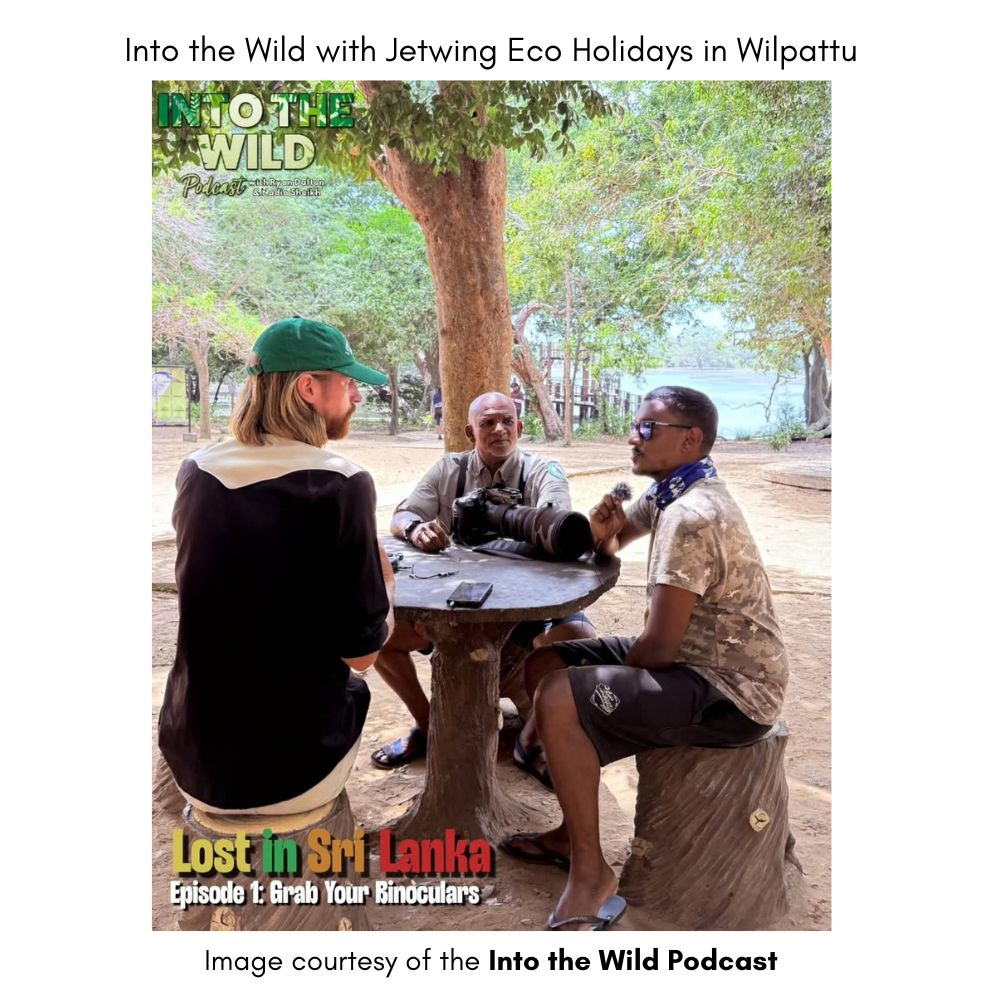
Beneath an old tree, seated aboard a boat resting beside the lake, Ryan and Chandika recorded a conversation about wildlife, tourism and land use.
A photograph from the session would later become one of the teaser images used to introduce audiences to the forthcoming Sri Lankan podcast series.
The following morning began before sunrise.
Heading onto the lake at dawn, Ryan and Daisy experienced a very different form of wildlife watching from the jeep safaris of Wilpattu. Birds became active around the water as the first light reached the surrounding landscape.
Among the morning’s most memorable encounters was a large roost of Indian Flying Foxes (Pteropus medius), allowing the group to observe one of Sri Lanka’s most impressive large bats at close range.
But Mahiyanganaya would also introduce a much more complicated conversation about the relationship between humans, wildlife and protected landscapes.
Near Mahiyanganaya lies Dambana, home to one of Sri Lanka’s best-known Indigenous Vedda communities.
Here Ryan sat down with a community elder, with Chandika helping translate the conversation.
It became one of the most emotional discussions of the journey.
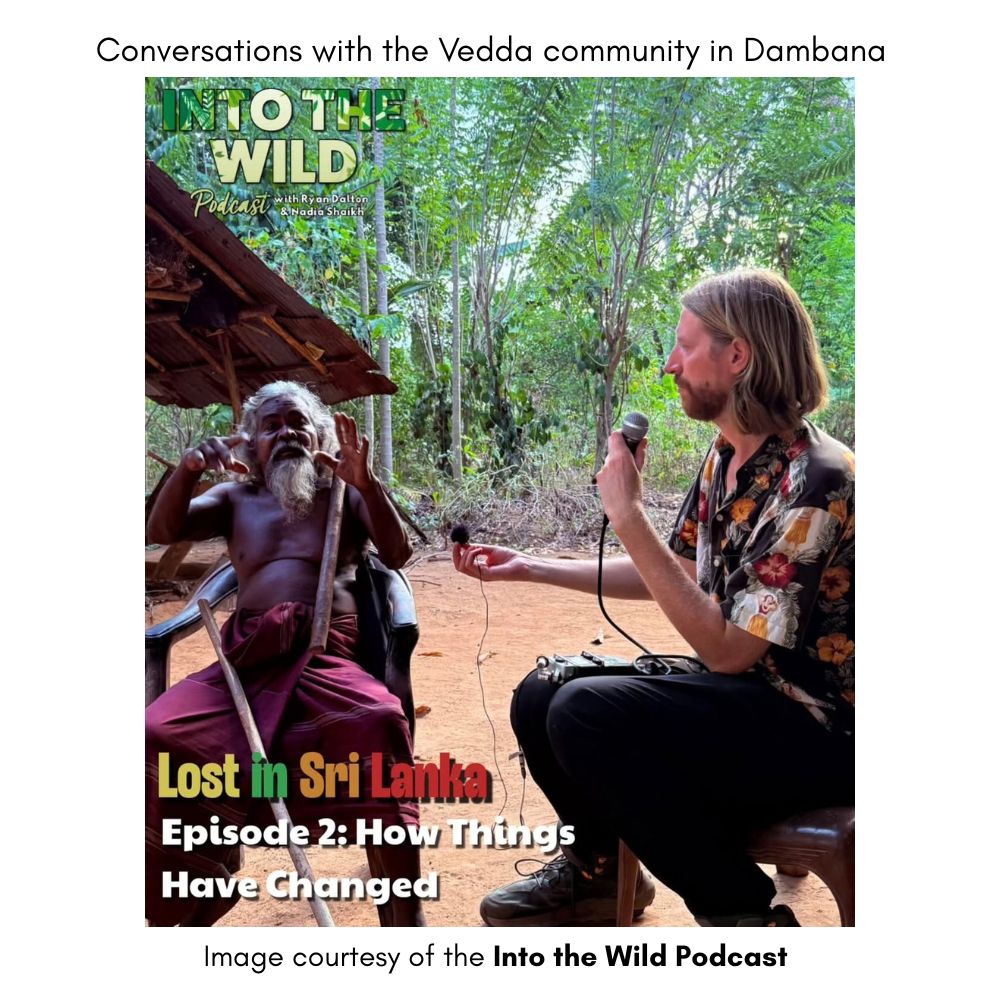
The Vedda relationship with Sri Lanka’s forests stretches back far beyond modern national parks and conservation boundaries. Traditionally associated with hunting, gathering and extensive movement through forest landscapes, many Vedda communities have experienced profound changes as access to land, livelihoods and wider Sri Lankan society have changed.
The conversation explored what that transition meant at a human level.
A society once far less dependent on a cash economy increasingly had to adapt to settled life and new ways of making a living. Agriculture became more important, yet farming in elephant country introduced another challenge: human-elephant conflict.
At the same time, younger generations increasingly looked beyond their villages for employment and opportunity.
With every generation that moves away, questions emerge about what happens to language, traditional ecological knowledge, customs and identity.
For Ryan, this was conservation seen from another angle.
Protecting wilderness is essential. But conservation is rarely only about wildlife. Decisions about land can also affect people whose relationship with those landscapes existed long before modern tourism or protected-area management.
It was a subject too complex for a simple conclusion, which was precisely why it deserved to be part of the journey.
The next stage brought the group to Gal Oya and an overnight stay at Wild Glamping Gal Oya, set at Rathugala among a mixture of farmland, forest and open countryside.
The morning began in familiar territory.
With Hetti leading the way, Ryan and Daisy headed out to birdwatch around the property, benefiting from the accumulated fieldcraft of a naturalist who has spent decades identifying Sri Lanka’s birds by appearance, movement, habitat and call.
But another important conversation awaited.
Rathugala is home to another Vedda community, with its own local history and traditions. Wild Glamping Gal Oya has worked closely with members of this community, employing local people and incorporating opportunities for visitors to learn about Vedda heritage and the surrounding landscape.
Ryan again spoke directly with members of the community, with Chandika translating.
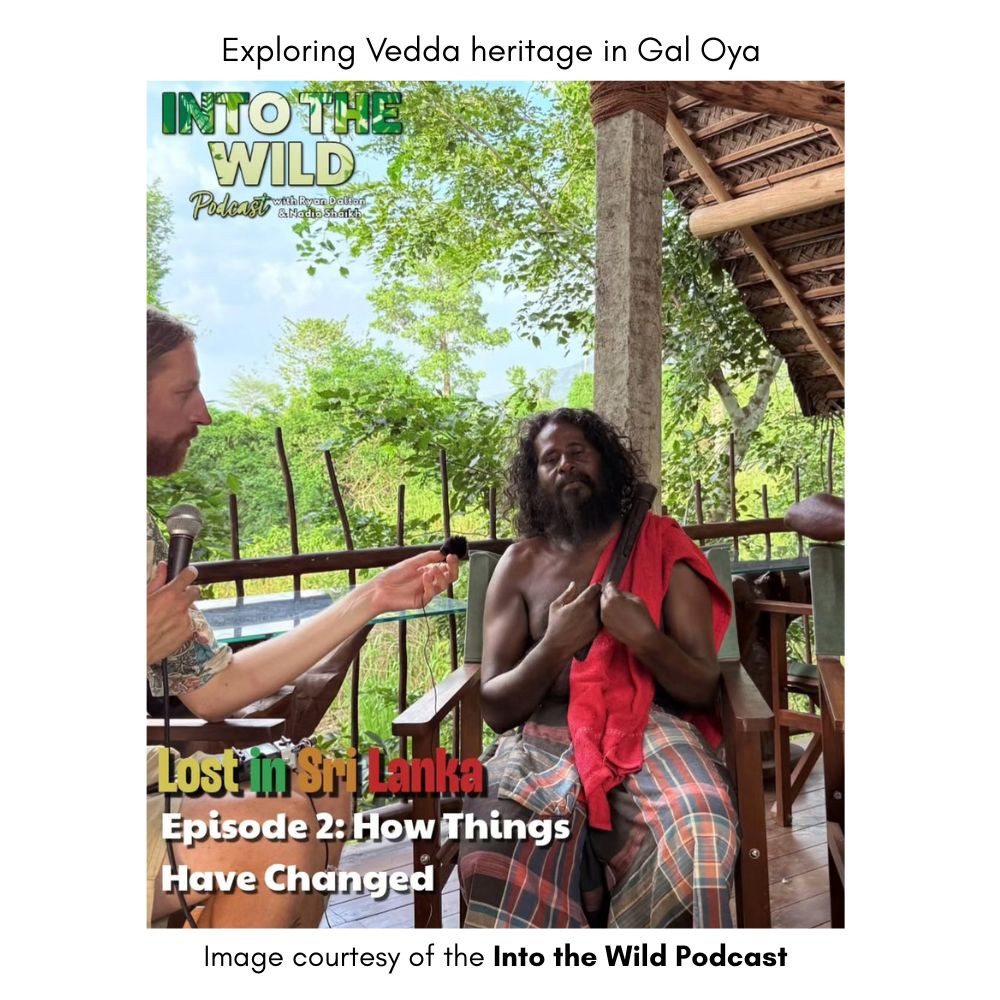
Many of the themes encountered at Dambana returned: changing access to traditional landscapes, adaptation from earlier forest-based lifestyles and the danger of cultural practices disappearing as younger generations move towards different livelihoods.
Yet here tourism introduced another possibility.
By sharing knowledge, traditions and stories with travellers, members of the community had found a way for aspects of their heritage to retain both relevance and economic value.
Tourism is not a solution to every challenge facing Indigenous cultures. Nor should living communities ever be reduced to attractions.
But when communities retain a meaningful role in how their own culture is presented, tourism can provide another reason for knowledge and traditions to continue being practised and passed forward.
The Lost in Sri Lanka episode that emerged from these conversations would later focus specifically on land and changing Indigenous life, featuring voices from both Vedda communities.
From Gal Oya the journey continued towards Panama, a quiet southeastern village providing access to Kumana National Park.
A full day inside Kumana delivered excellent wildlife encounters.
But one stood above the rest.
After the tantalising glimpse in Wilpattu, Ryan finally experienced his first prolonged view of a Sri Lankan leopard.
It was an encounter he would later describe enthusiastically on the podcast, one of those moments when years of fascination with wildlife suddenly become condensed into the presence of a single animal.
The contrast with Wilpattu was fitting.
There, the leopard had been little more than movement among shadows.
In Kumana, it finally revealed itself.
Wildlife travel depends upon these moments of unpredictability. No naturalist can guarantee what a wild animal will do or where it will appear. That uncertainty is part of what makes an authentic encounter so powerful.
For the final wildlife chapter, the journey turned west towards an entirely different ecosystem.
Sinharaja Rainforest Reserve is one of the most important habitats for Sri Lanka’s endemic wildlife, particularly its forest birds.
On two successive mornings, the group left their rainforest accommodation and travelled by vintage jeep towards villages bordering the forest.
Gone were the open waterholes and dry woodland of Wilpattu and Kumana.
Here the landscape was green, enclosed and often misty.
Rainforest wildlife revealed itself differently.
Grey langurs moved among the vegetation. Sri Lanka Blue Magpies brought flashes of colour into the forest. Bird calls travelled through dense foliage long before their owners could be seen.
It was also the kind of environment where an experienced naturalist becomes particularly valuable.
Finding wildlife in rainforest is often about recognising a call, noticing movement inside layers of vegetation, understanding feeding behaviour and knowing where a particular species is likely to appear.
With Hetti guiding, Ryan and Daisy experienced not simply a morning walk through a beautiful forest but the difference that decades of field knowledge can make when attempting to understand it.
It provided a fitting final chapter.
The journey had begun beside Sri Lanka’s northwestern lagoons and travelled through mangroves, dry-zone forests, freshwater lakes, Indigenous landscapes, agricultural areas and national parks before finally reaching the island’s wet-zone rainforest.
Within a relatively short distance, Sri Lanka had revealed an extraordinary diversity of ecosystems and an equally diverse collection of relationships between people and nature.
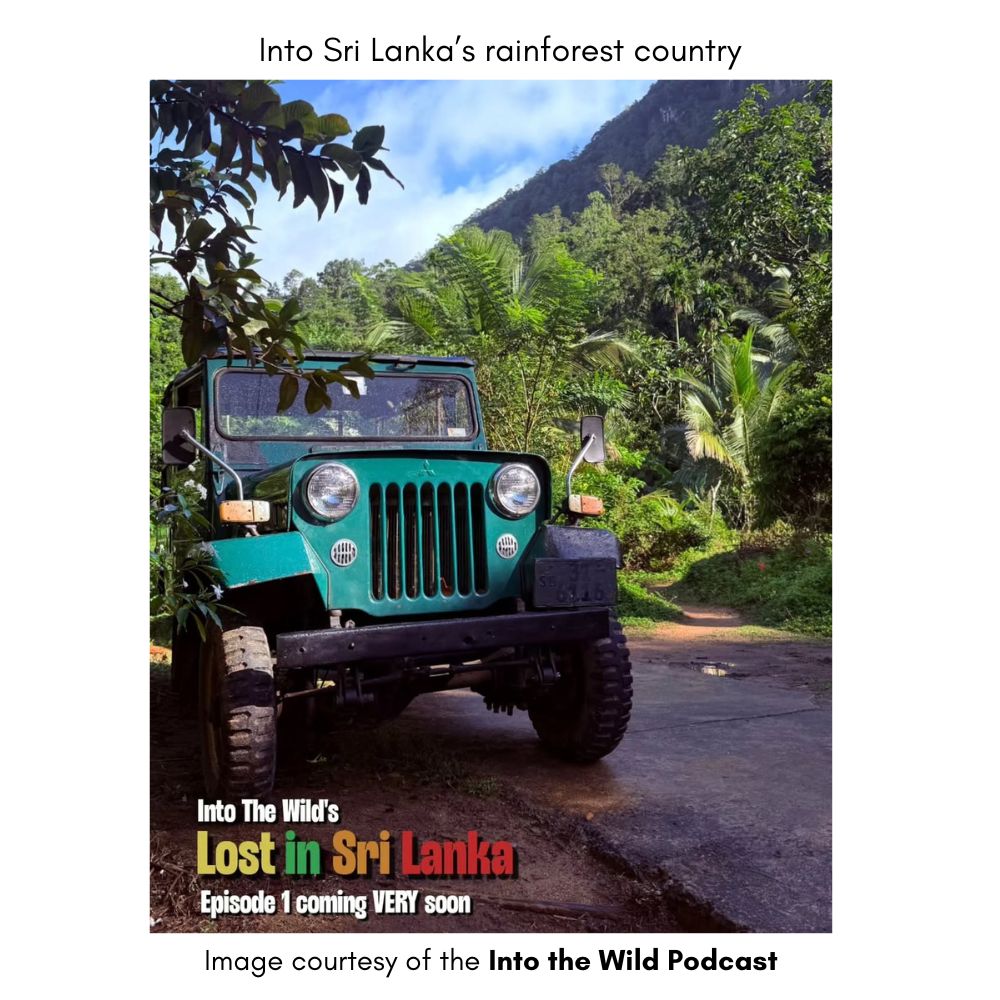
The experiences and conversations recorded during the journey eventually became three Into the Wild episodes released in 2026.
The first episode examines wildlife tourism itself: what responsible wildlife tourism should look like, what happens when tourism is poorly managed and how communities can remain part of the destinations tourism depends upon.
It features Chandika Jayaratne, Suchithra “Hetti” Hettiarachchi and Dilsiri Welikala.
The second episode turns towards land, history and the Vedda communities encountered during the journey. Ryan hears directly from Ranjila Attho and Gunabanda Atho about changes from earlier forest-based and nomadic ways of life towards increasingly settled communities, and how those changes affect both people and their relationship with wildlife.
The final episode returns to the kind of conversation that inspired much of the journey: two wildlife enthusiasts talking openly about nature, tourism and Sri Lanka.
Featuring Chandika Jayaratne and Namal Kamalgoda, it closes a series that Into the Wild itself credits Jetwing Eco Holidays with helping make possible.
There is an important distinction between arranging a safari and facilitating a wildlife project.
A conventional itinerary might ask where guests want to go, where they would like to stay and which animals they hope to see.
A project like Lost in Sri Lanka required something different.
It required identifying landscapes that could tell different parts of the story. It meant bringing together wildlife encounters with people whose experiences could add substance to the conversations. It required knowledgeable naturalists, local relationships, accommodation and transport logistics, access to remote parts of the island, flexibility for recording and photography, and the ability to move between wildlife, conservation, culture and history without treating them as separate subjects.
That is where specialist destination knowledge matters.
Jetwing Eco Holidays is a Sri Lankan wildlife and nature travel specialist with the capability to support wildlife-focused travel as well as photography, filming, podcasting and other media projects across the island.
Its role is not simply to transport a crew between famous attractions.
The deeper value lies in understanding what is worth exploring between them.
For a documentary, podcast, photographic assignment or conservation-led media project, this can mean connecting a visiting team with experienced naturalists, remote wildlife locations, researchers, conservation voices, communities and people whose stories provide a more complete picture of Sri Lanka.
Jetwing Eco Holidays’ wider media and wildlife work is built around the same combination of naturalist expertise, destination logistics and knowledge of Sri Lanka’s ecosystems.
For Jetwing Eco Holidays, wildlife is not simply another category of travel.
The people designing and leading these journeys are people who are themselves fascinated by the natural world.
Chandika’s involvement in Lost in Sri Lanka went well beyond accompanying a media team. He became part of the conversations, discussing wildlife, land, conservation and tourism while also helping Ryan communicate with people whose perspectives might otherwise have remained inaccessible to an English-speaking audience.
Hetti brought something different. After more than two decades guiding wildlife tours for Jetwing Eco Holidays, his knowledge is built from thousands of hours spent watching Sri Lanka’s landscapes change with the seasons, listening for birds, reading animal behaviour and introducing travellers to wildlife without turning nature into a checklist.
The value of that kind of experience cannot be recreated by simply following an itinerary.
And that is ultimately the philosophy behind the journeys Jetwing Eco Holidays seeks to create.
Wildlife should be encountered with patience.
Communities should be treated as participants rather than scenery.
Culture deserves context.
Animals should never have to perform for travellers.
And a successful wildlife journey should leave someone knowing more about the place they visited than the number of species they photographed.
Eventually, Ryan and Daisy returned to Colombo and departed Sri Lanka.
They left with photographs, recordings and memorable wildlife encounters, from a leopard disappearing into Wilpattu’s shadows to another finally stepping into view in Kumana; from flying foxes above Mapakada Lake to endemic birds moving through the mist of Sinharaja.
But Lost in Sri Lanka became something larger than a collection of sightings.
It became a series of conversations about what happens when tourism reaches a community, why wildlife needs economic as well as ecological value, what conservation can mean for people with ancient connections to protected landscapes, and how tourism might sometimes help keep both natural and cultural heritage relevant.
For anyone seeking to explore Sri Lanka’s wildlife seriously, whether as a traveller, photographer, filmmaker, podcaster, researcher or conservation storyteller, the most interesting stories are rarely confined to the island’s best-known attractions.
They are found in the spaces between them.
In the naturalist who recognises a bird before anyone else has heard it.
In the community elder explaining how a landscape has changed.
In a tourism entrepreneur restoring mangroves.
In the quiet around a national park after dark.
And sometimes, in a leopard that appears for only a few seconds before disappearing again.
That is the Sri Lanka Jetwing Eco Holidays seeks to reveal: wild, complicated, culturally rich and worth understanding as much as it is worth seeing.