12
JAN
2026
Jetwing Eco Holidays & the Future of Responsible Elephant Safaris
Read Article
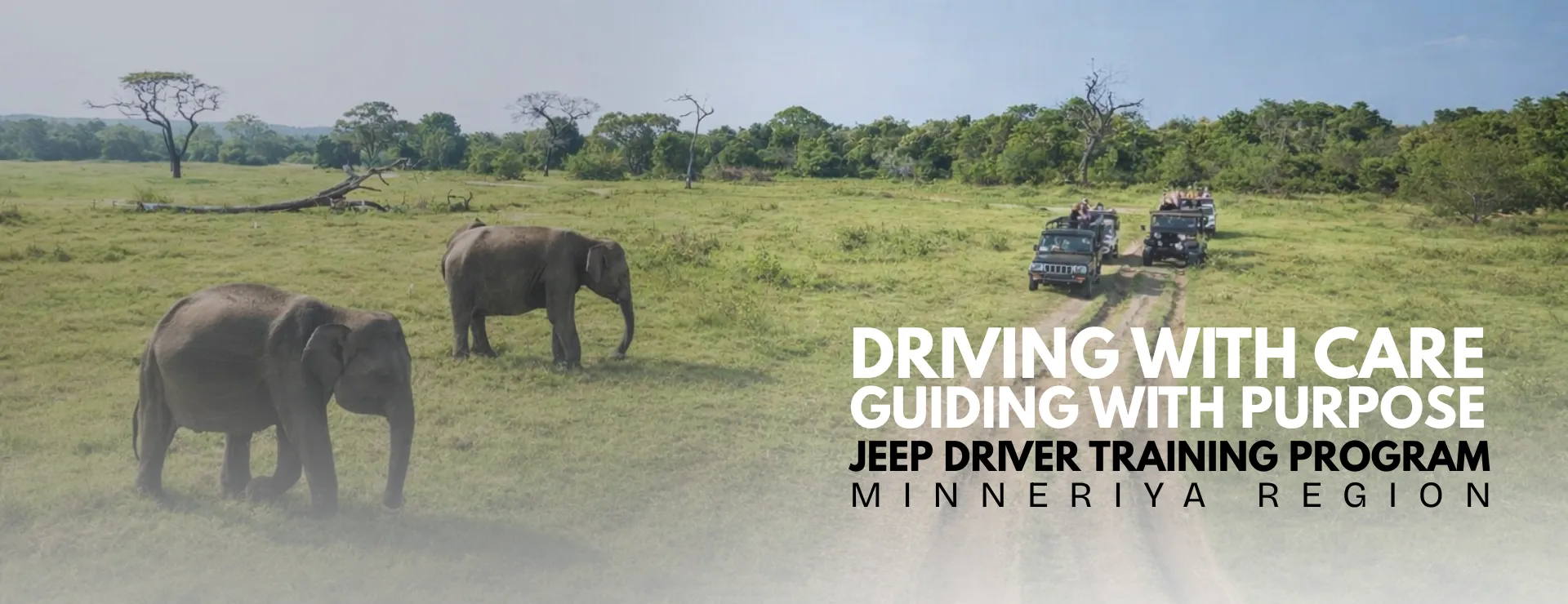

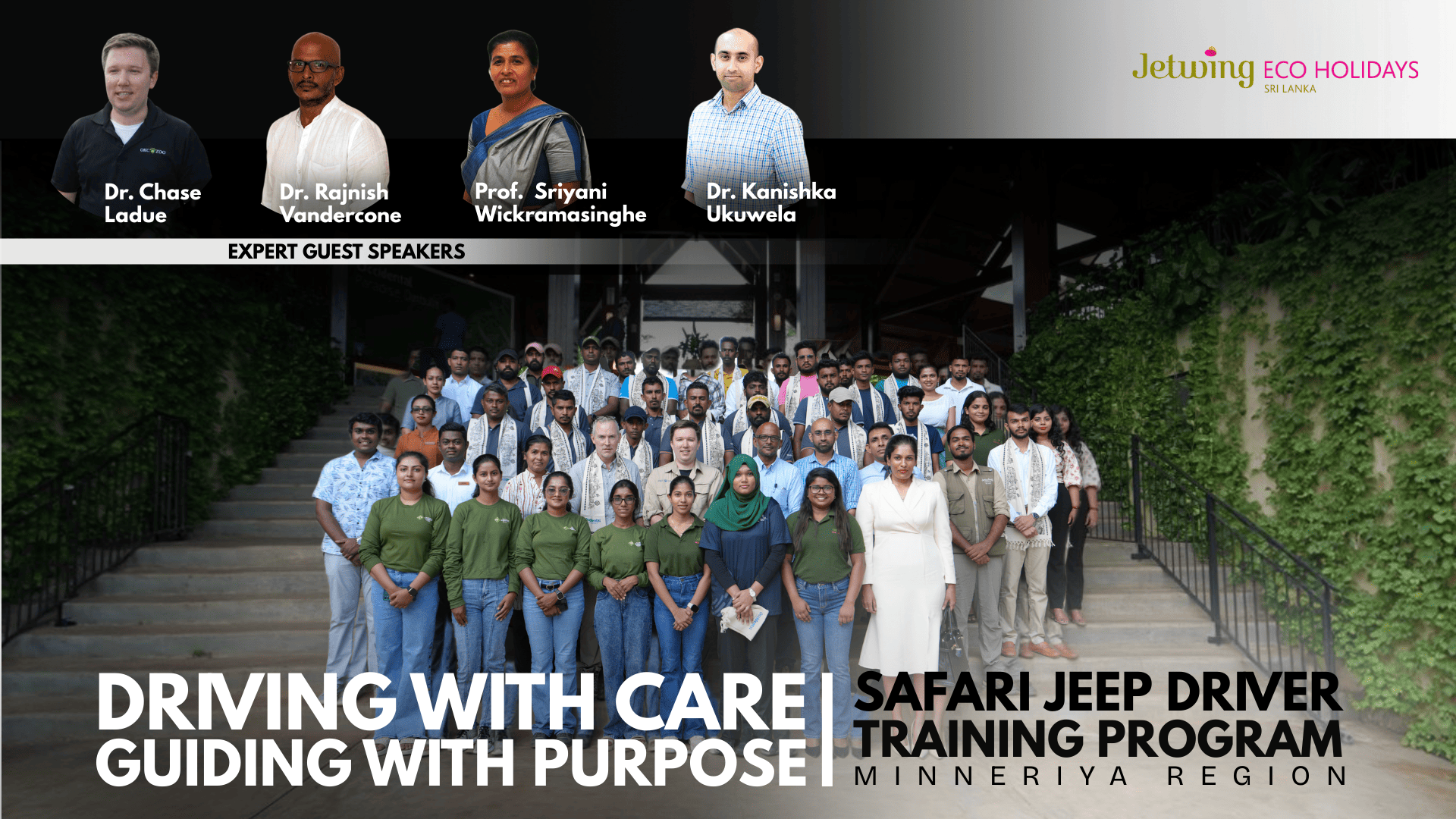
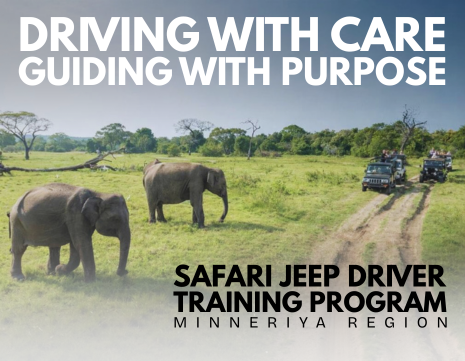
In July 2025, Jetwing Eco Holidays concluded a focused training programme for safari jeep drivers titled “Driving with Care, Guiding with Purpose”, held at Occidental Paradise Dambulla. The initiative brought together safari drivers from Dambulla, Habarana, and Sigiriya with a clear objective: to improve safety, animal welfare, and the overall quality of elephant safaris in one of Sri Lanka’s most visited wildlife regions.
Safari jeep drivers play a crucial role in shaping how visitors experience Sri Lanka’s wildlife. Their decisions on distance, positioning, and interpretation directly affect both guest safety and animal behaviour. This programme was designed to support them with practical knowledge backed by scientific research, rather than simply issuing rules or restrictions.
Addressing crowding and elephant stress
Minneriya National Park is best known for its seasonal elephant gatherings, which can attract large numbers of safari vehicles. During peak periods, congestion and close approaches to herds have increasingly led to stressed animals, particularly when vehicles drive too close to family groups or calves. In some cases, this stress results in elephants charging safari jeeps, putting drivers, guests, and animals at risk.
A key focus of the training was helping drivers better understand elephant behaviour, including how male and female elephants respond differently to pressure and how protective behaviour increases when young calves are present. Drivers were guided on how to recognise early warning signs of stress and agitation, allowing them to maintain safe distances and avoid situations escalating into dangerous encounters.
Learning from research and field science
The programme was led by Dr. Rajnish Vandercone of Rajarata University and Dr. Chase LaDue of the Oklahoma City Zoo, who jointly lead the Sri Lanka Elephant Project. Drawing on long-term field research conducted in and around Minneriya, they shared insights into elephant movement, behaviour, and stress responses caused by high levels of human activity.
One of the most impactful aspects of the sessions was the presentation of documented research findings, including stool analysis that demonstrates how chronic disturbance can lead to measurable biological changes in elephants. This evidence helped connect day-to-day safari practices with long-term impacts on animal health, reinforcing why responsible behaviour inside national parks matters.
Reducing pressure through better safari planning
Beyond behaviour inside the park, discussions also focused on managing crowding at a broader level. Drivers and operators were encouraged to route elephant safaris to nearby Hurulu Eco Park and Kaudulla National Park when conditions at Minneriya become overly congested. While these parks may host fewer elephants at any one time, they offer calmer viewing conditions and a more relaxed experience for both guests and wildlife.
Practical guidance was also shared on how drivers and operators can explain these alternatives to guests who specifically request Minneriya, reframing them as thoughtful choices that enhance the safari experience rather than compromises.
Expanding the safari experience beyond elephants
The programme also aimed to broaden how safari drivers interpret wildlife during game drives. Since significant time is spent travelling through forest, grassland, and wetland habitats, drivers were encouraged to highlight the wider biodiversity of the region.
Prof. Shriyani Wickremasinghe delivered a session on bird diversity, while Dr. Kanishka Ukuwela presented on reptiles and overall biodiversity within the Minneriya landscape. These sessions showed how drivers can add depth to a safari by pointing out endemic birds, reptiles, and lesser-known species, creating a richer and more engaging experience even before elephants are encountered.
Recognising responsibility on the ground
The programme concluded with the presentation of certificates to participating drivers, recognising their commitment to improving standards within wildlife tourism. More importantly, it acknowledged the role they play every day as ambassadors for Sri Lanka’s natural heritage, often shaping a visitor’s understanding of wildlife within the first few hours of a safari.
Looking ahead
At Jetwing Eco Holidays, we believe responsible tourism must create lasting value for wildlife, visitors, and the communities who depend on tourism for their livelihoods. That means placing animal welfare at the centre of every experience, ensuring guests enjoy encounters that are safe and meaningful, and supporting practices that protect natural habitats over the long term.
This training programme was not intended as a one-off solution, but as a starting point for change. By investing in education, research-backed guidance, and collaboration with those working daily in the field, we hope to contribute to a wildlife tourism model that allows Sri Lanka’s elephants and ecosystems to thrive, while continuing to support the people whose lives are closely tied to them.